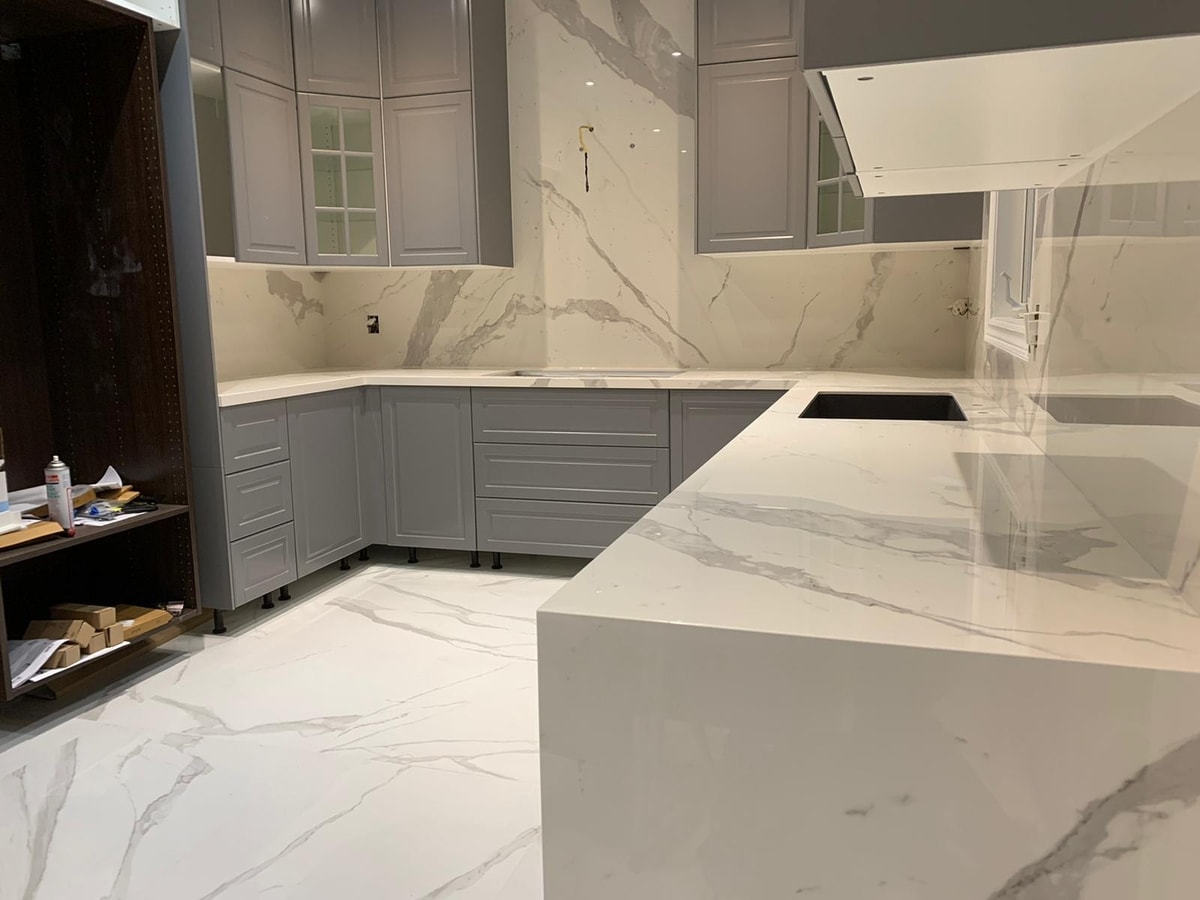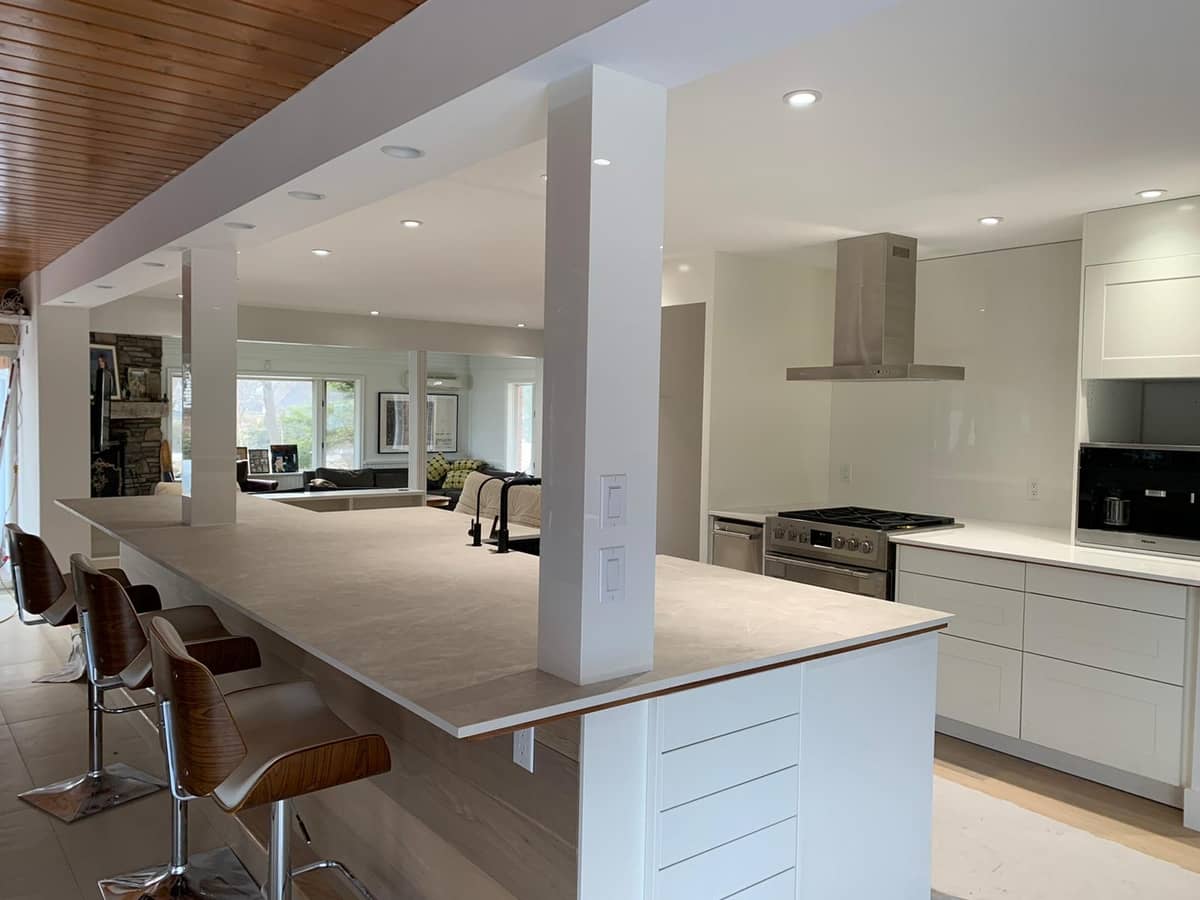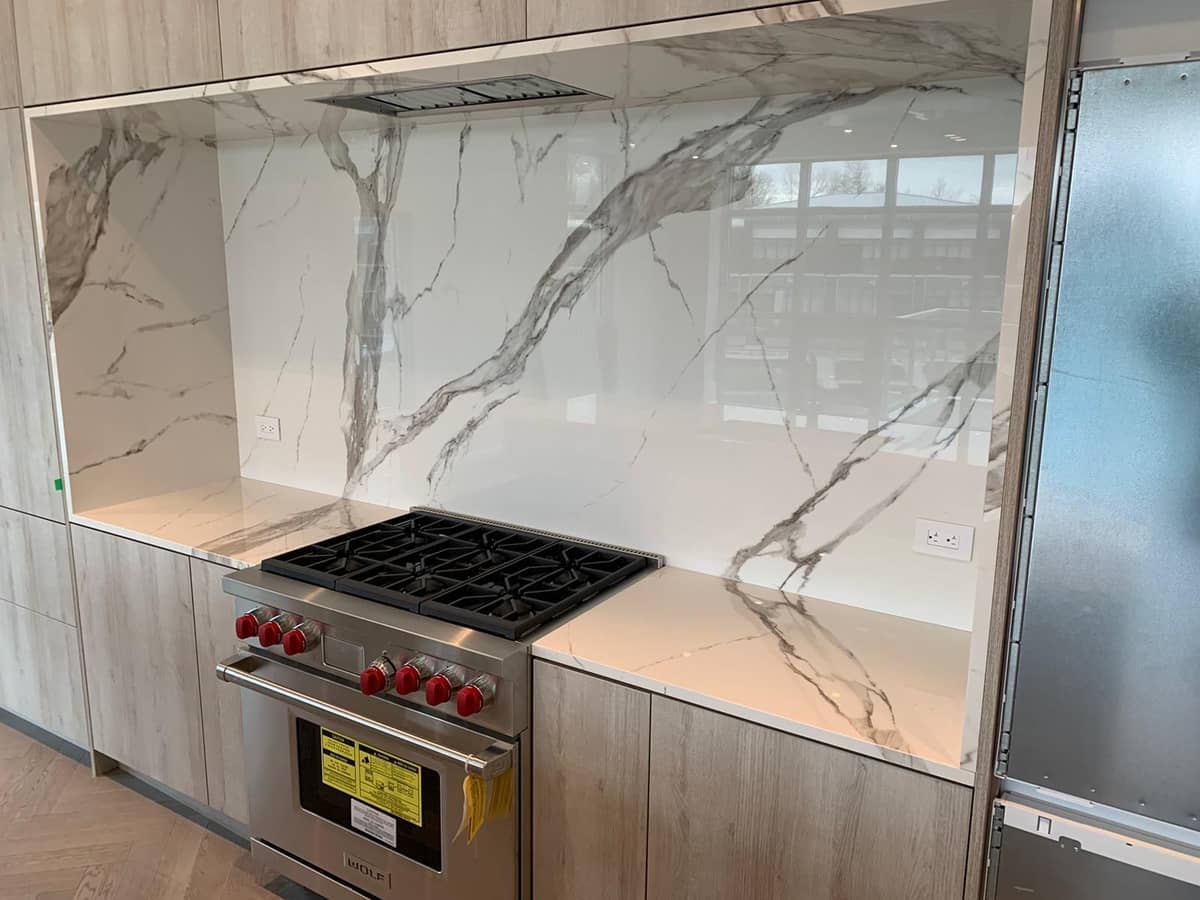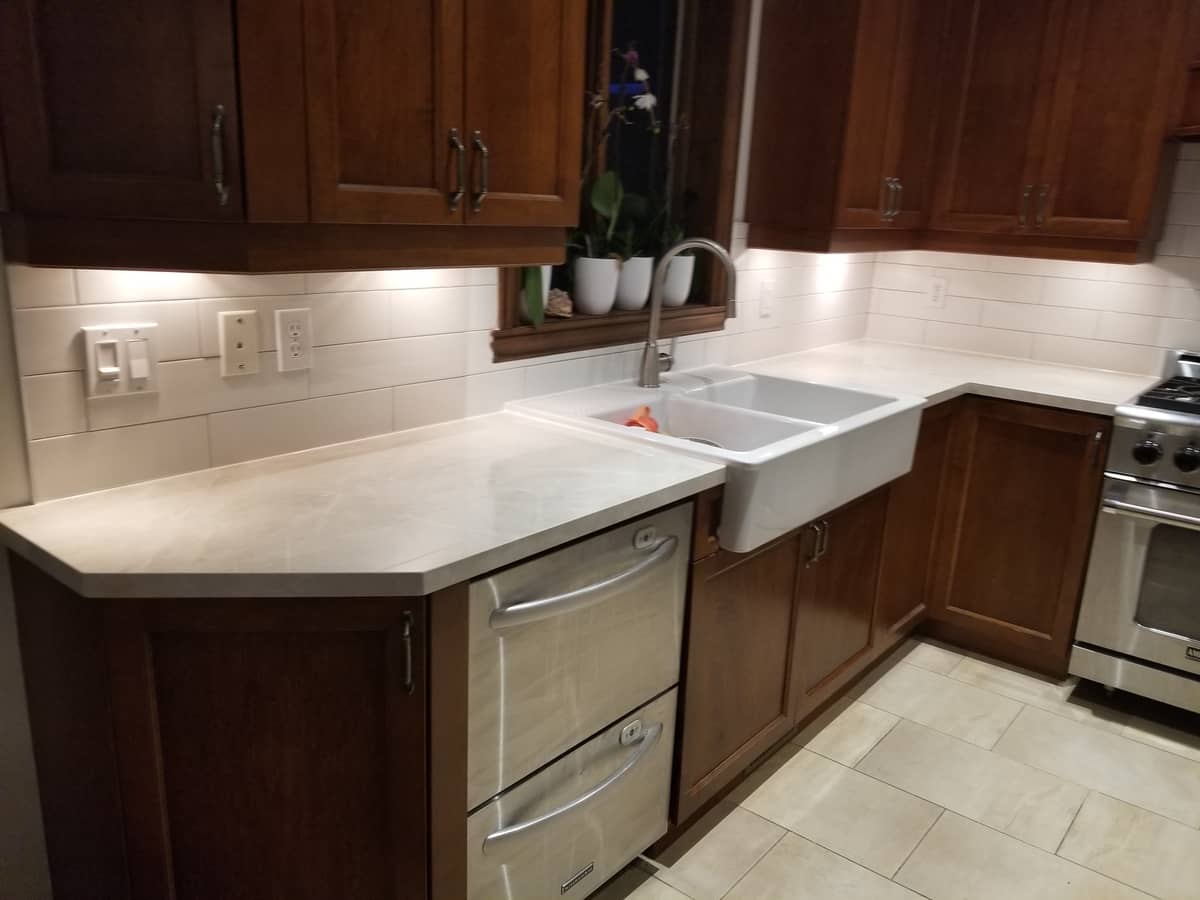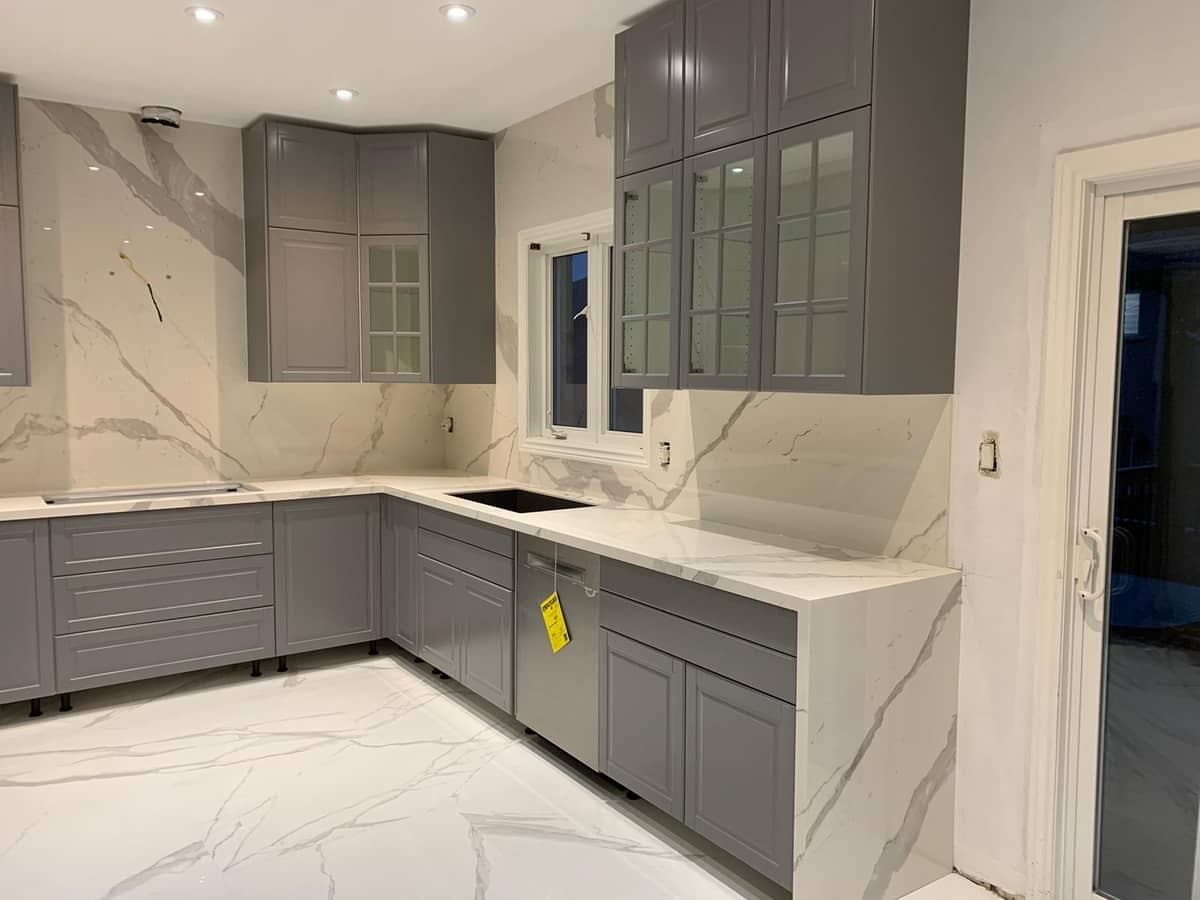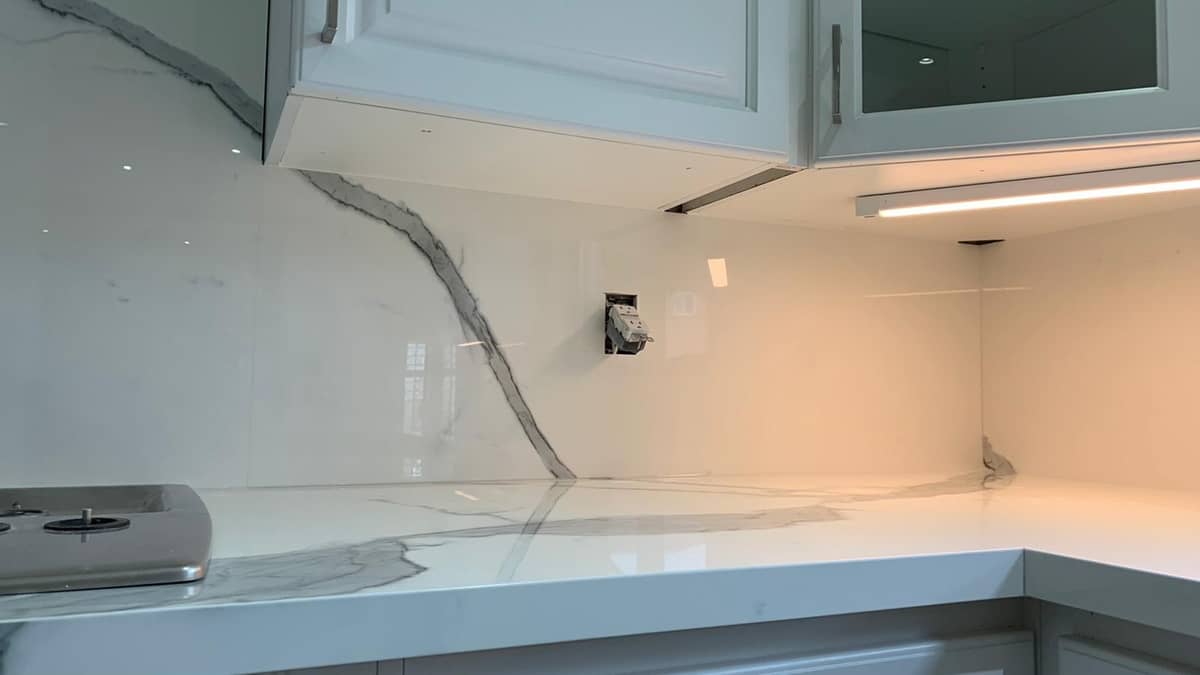
Porcelain slab is the best material for countertops due to its durability and beauty. Porcelain slab offers enhanced durability, design versatility, superior hygiene, and cost-effectiveness over time, making it an ideal choice for virtually any surface.
If you’ve been searching for the best material for countertops, there’s no doubt you’ve come across a staggering amount of options. Though natural stone has long stood out as a luxurious choice, porcelain slab has been making waves in the design space. We feel that porcelain slab could be the perfect choice for countertops, vanities, and kitchen backsplash. Let’s compare porcelain vs marble countertops and uncover why this versatile and beautiful material has continued to grow in popularity.
At Counter Culture, we have more than 25 years of experience in stone fabrication and have dedicated the last decade to the study of large-format porcelain slab. We know that porcelain can be the ideal material choice for virtually any surface in a home. In this post, we compare marble vs. porcelain countertops to help you understand which option is most suitable for your space. Whether you are a home builder, designer, or owner, we have the expertise you’ve been searching for and are the porcelain slab fabricator you can depend on.
Porcelain vs Marble, which is Best for Countertops?
To uncover which material type is best for your project, understanding the properties of porcelain countertops vs marble is essential. Though porcelain can be fabricated to resemble marble, a key difference between the two is how much maintenance they require. Whether you are looking for porcelain kitchen countertops or are deciding between marble and porcelain bathroom vanities, you’ll want to consider the following points.
Cleanliness – if comparing porcelain vs marble countertop options, hygiene and cleanliness should always be a top concern. Though beautiful to look at, marble is a porous material that is prone to harbouring bacteria. It also means that it can absorb liquids such as water and oil, and may also result in stains from foods such as berries or turmeric. As porcelain is a non-porous material, lingering stains and bacteria are less of a concern. Though adequate cleaning is still required, you can feel confident that unwanted bacteria will not leech into your porcelain countertops.
Porcelain’s non-porous surface makes it an excellent choice for environments where hygiene is a priority, such as kitchens and bathrooms. It does not harbour bacteria or odours and is easily cleaned with just soap and water. The hygienic benefits of porcelain are important when you are considering this material for a lived-in or high-traffic area of the home.
Durability – marble is softer when compared to porcelain. It is prone to scratching and chipping, and can leave some feeling like their countertops are something to worry about. Marble countertops may also become dull over time due to how easily they can be scratched. Porcelain, on the other hand, is a very durable material that cannot be easily scratched or chipped. Though porcelain slab can be difficult to install and is fragile during the installation process, once installed, it is one of the most durable countertop options.
Porcelain slabs offer remarkable durability and resistance to scratches, chips, and heat. This makes them ideal for high-traffic areas like kitchens and bathrooms. Unlike marble, porcelain does not require frequent sealing, which reduces both maintenance costs and effort. Emphasizing porcelain’s ability to withstand daily wear and tear without losing its aesthetic appeal is crucial for those who prioritize long-term value.
Maintenance – day-to-day maintenance of both marble and porcelain countertops is simple. Cleaning with soap and water is enough to keep either surface clean. Keep in mind that marble requires regular sealing while porcelain does not. For a low-maintenance countertop option, porcelain is the better choice.
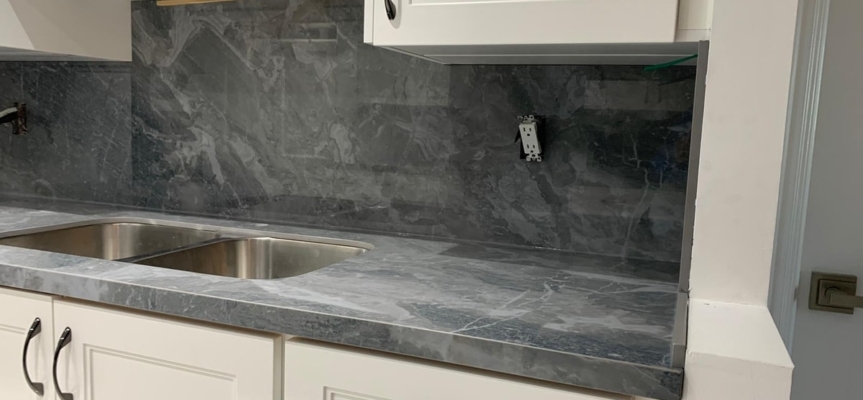
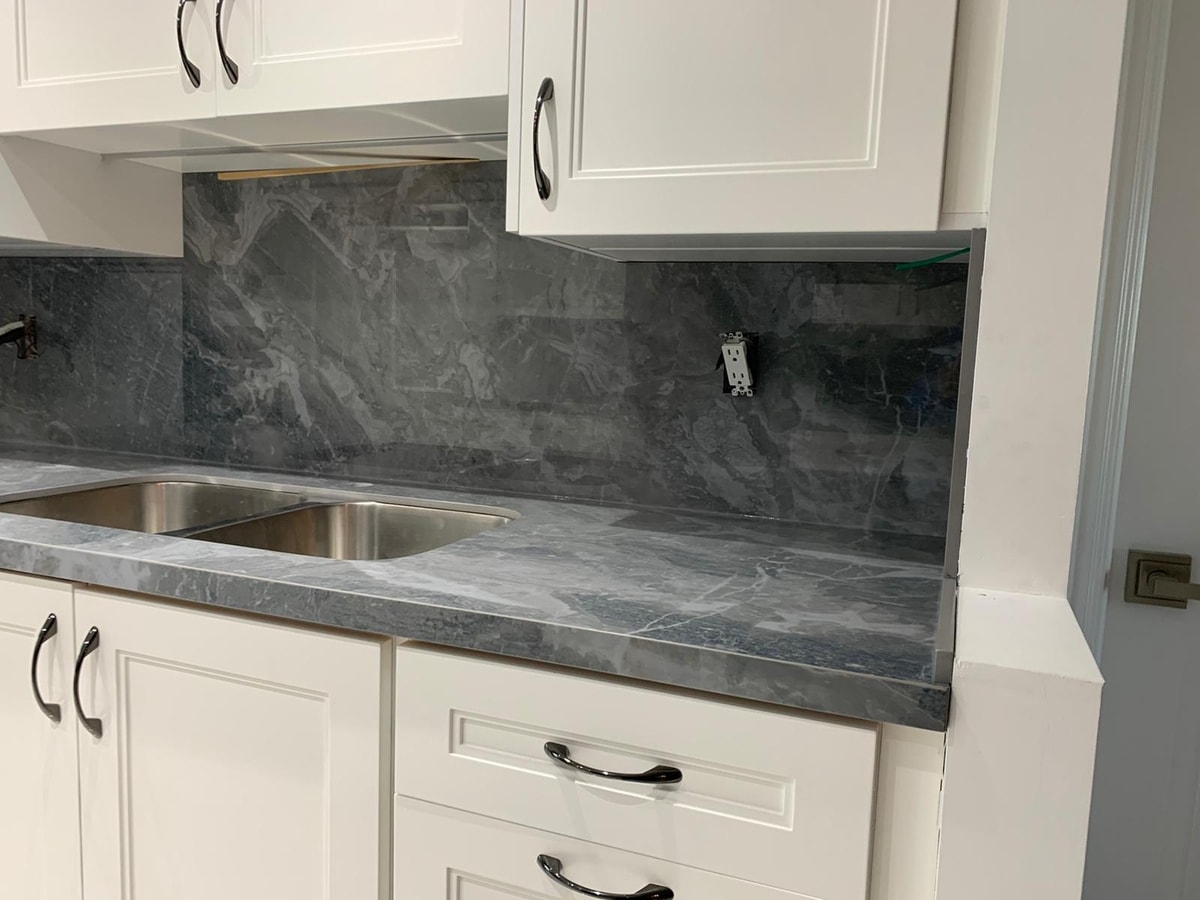
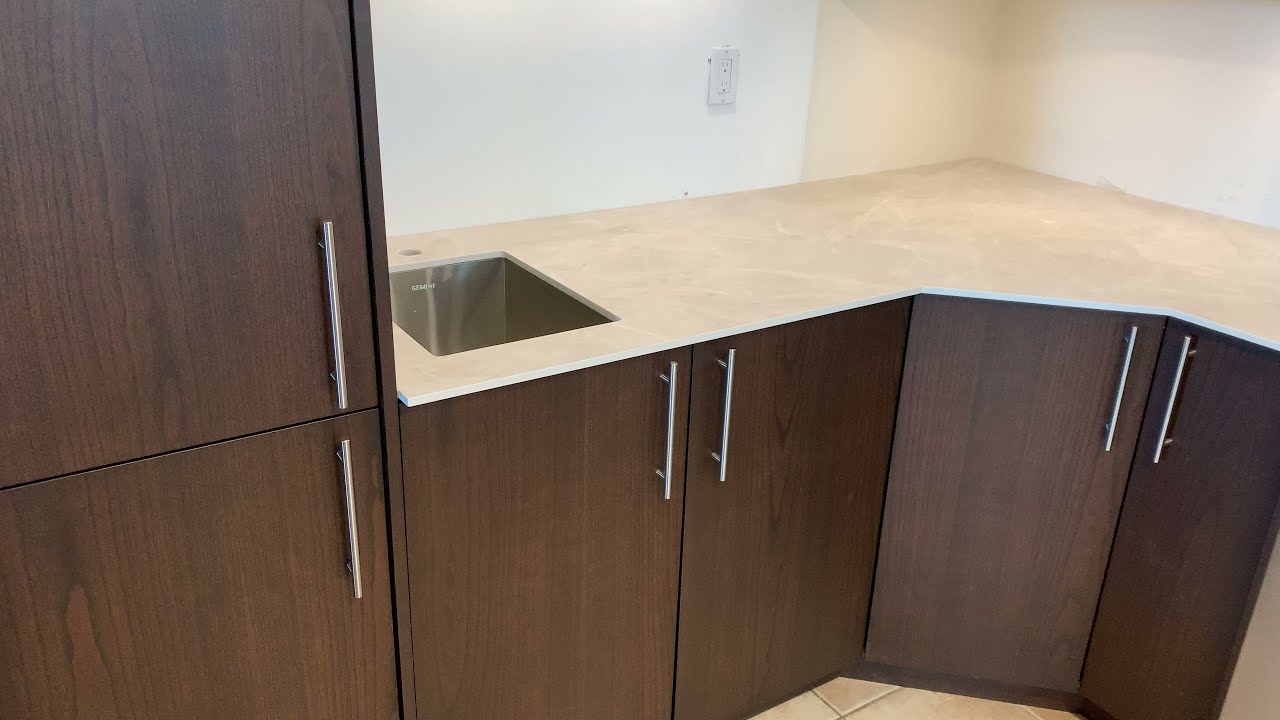
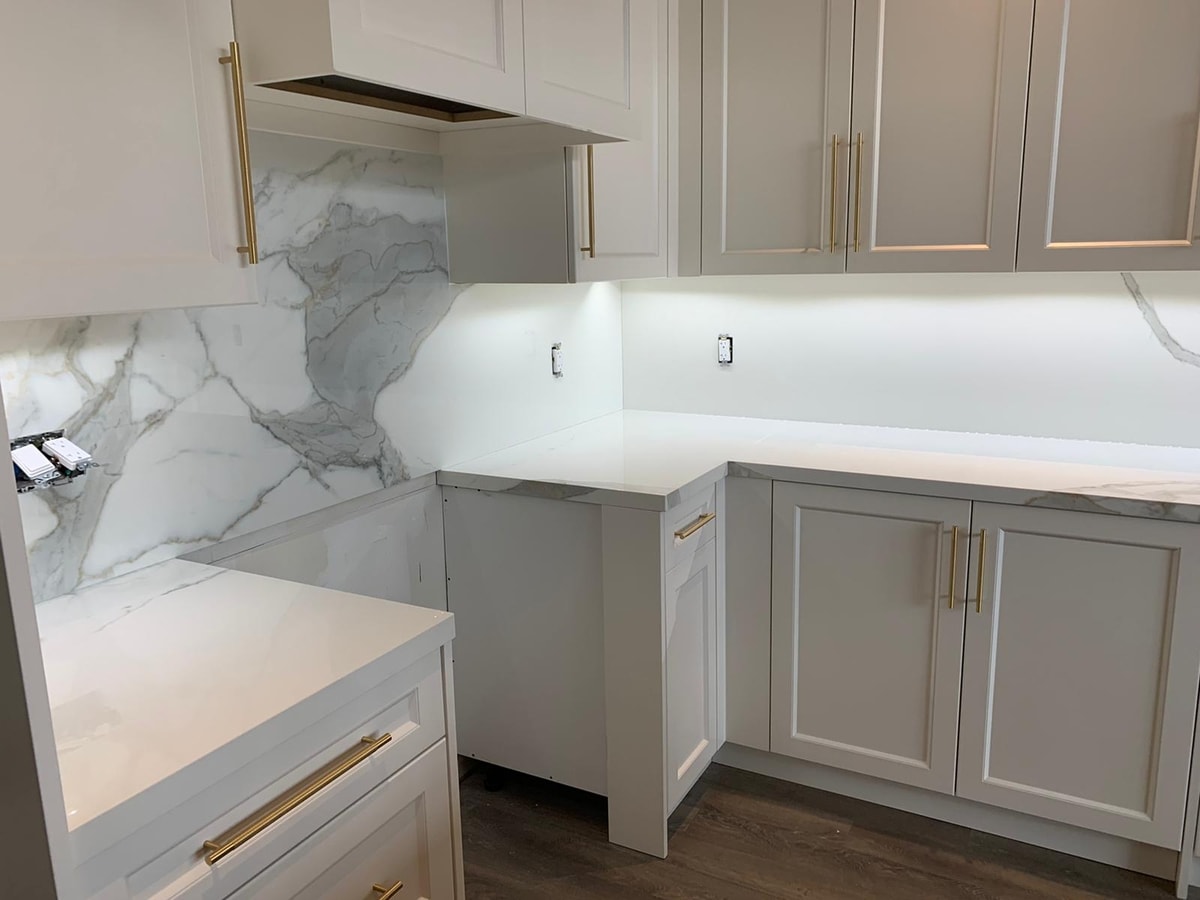
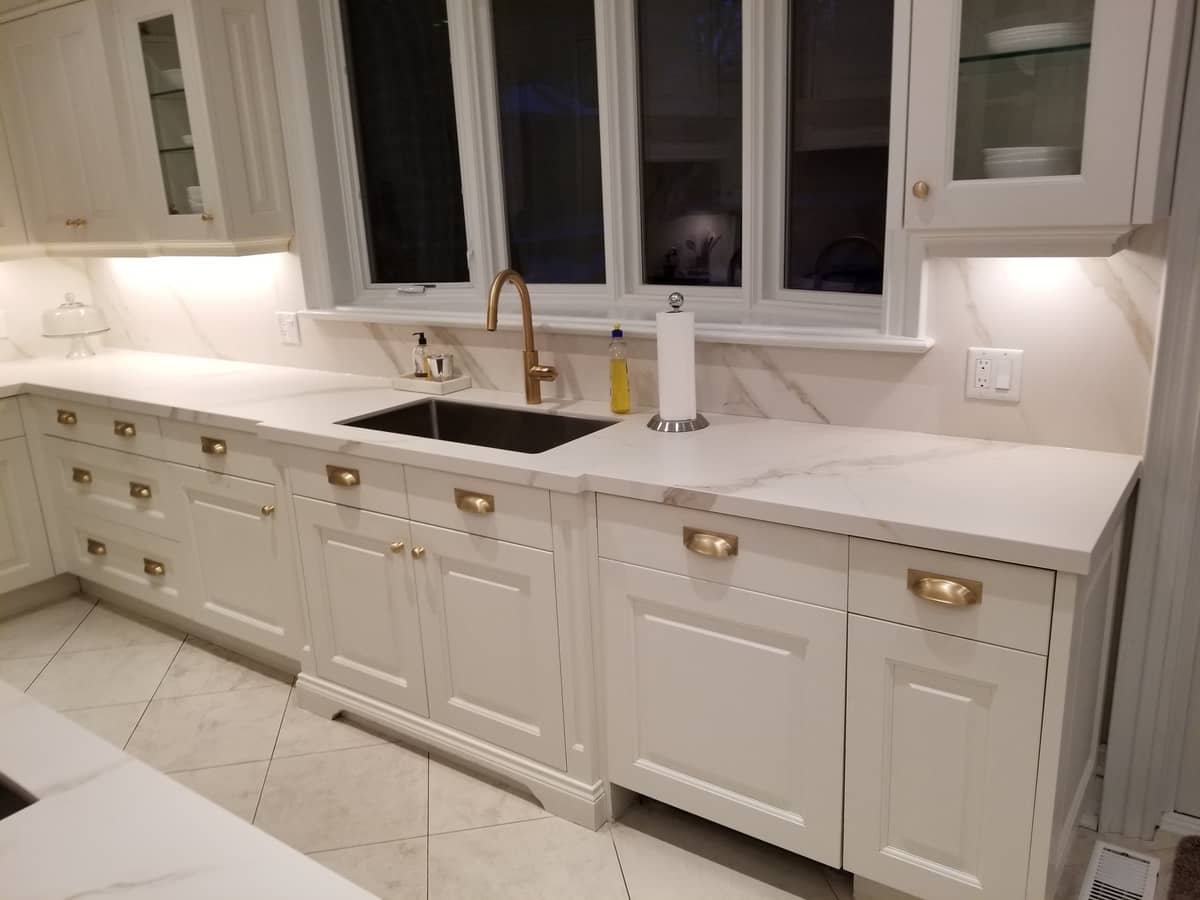
Design Versatility – Porcelain slabs can be fabricated in an extensive range of colours and patterns, including designs that mimic marble and other natural stone patterns. This variety allows designers and builders to achieve their desired look without the limitations often imposed by the natural veining and colour variations found in marble. Highlighting specific case studies or visual examples where porcelain was chosen for its aesthetic flexibility could provide tangible insights to potential clients.
Knowing which material is best for kitchen countertops can sometimes feel difficult. However, if you are looking for a countertop option that is low-maintenance, looks beautiful, and is made for real life, porcelain slab might just be your best bet.
What Other Countertop Options Could I Consider?
Porcelain slab is a fantastic choice for countertops that offers both beauty and practicality. Though you can’t go wrong with porcelain, looking into all of your options is always a smart move. Our post, Porcelain Countertops vs Granite Countertops, helps you compare another popular countertop choice to ensure you’ve chosen the countertop type that is best for your space.
Is Porcelain Slab Expensive?
When considering the price point, porcelain slab is in line with other luxury countertop options. Keep in mind that long-term, porcelain may be a more affordable option as it offers increased durability and less maintenance compared to other natural stone options. Our post, Is Porcelain Slab Affordable, offers more insight into the cost of porcelain slab countertops.
While the initial cost of porcelain can be comparable to that of high-end marble, porcelain slabs often emerge as a more cost-effective solution over time due to their low maintenance needs and longevity. Discussing the financial benefits, including potential savings on repairs and replacements, would provide a more comprehensive understanding of why porcelain is a prudent investment for large-scale projects.
How Can I Find a Porcelain Slab Fabricator Near Me?
Though it has been popular in Europe for some time, porcelain slab continues to gain popularity in North America. For this reason, finding an experienced porcelain slab fabricator can be challenging. Our post, Where Can I Buy Porcelain Slab, offers insight into finding a porcelain slab fabricator that can accommodate your project.
Choosing between porcelain and marble countertops depends on the specific needs and preferences of the project. However, for those seeking a durable, low-maintenance, and aesthetically versatile option, porcelain slabs offer distinct advantages that marble cannot match. Encouraging clients to consider these benefits can help them make informed decisions that align with their project goals and long-term satisfaction.
Porcelain slab and marble are both beautiful options, though porcelain may be a more suitable option for those who truly live in and use their kitchens. If you are looking to learn more about porcelain slab, contact the experts at Counter Culture. We look forward to showing you just how incredible porcelain slab can be.
Our Completed Porcelain Kitchen Countertop Projects